Views: 0 Author: Site Editor Publish Time: 2026-04-08 Origin: Site
Anchor Type | Ideal Use | Key Factors Influencing Choice |
|---|---|---|
Y-Shaped Anchors | Thick linings | Uniform load, deeper penetration |
V-Shaped Anchors | Thin linings | Flexibility, support for lighter materials |
Use V-shaped anchors for thin linings. They provide flexibility and support for lighter jobs.
Choose Y-shaped anchors for thick linings. They offer extra strength and stability for heavy-duty applications.
Always match the anchor type to your furnace's needs. This helps prevent damage and ensures safe operation.
You might wonder what keeps the inside of a furnace safe and strong. Refractory anchors do this important job. These are special metal pieces that hold the lining in place inside high-temperature equipment. You can find different types of refractory anchors, each designed for a specific purpose. Some look like a V, while others have a Y shape. There are even more types of refractory anchors, so you can always find one that fits your needs.
When you use the right types of refractory anchors, you help your furnace lining stay put, even when things get really hot. These anchors are made from heat-resistant materials, so they do not melt or break down easily. They also make it easier to install and replace linings, which saves you time and effort.
Refractory anchors play a big part in keeping your furnace running smoothly. Here’s how they help:
They keep the lining stable and stop it from moving or falling.
They help manage heat, so the furnace works more efficiently.
They resist corrosion from chemicals and gases inside the furnace.
They make it easy to install and maintain the lining, so you spend less time on repairs.
Let’s break it down even more:
They make the lining last longer by stopping cracks and damage.
They prevent the lining from falling apart, even when the furnace gets very hot.
They help the lining handle sudden changes in temperature without breaking.
Tip: Choosing the right types of refractory anchors means your furnace will be safer, last longer, and need fewer repairs.
You see v-shaped anchors in many furnaces. These anchors have two legs that form a “V.” This shape gives your lining support from two directions. You get flexibility and strength at the same time. V-shaped anchors work well in light and medium-duty jobs. They hold thin linings in place and help them last longer.
You can find v-shaped anchors in blast furnaces, electric arc furnaces, kilns, and smelters. These are all places where heat and stress can damage the lining. V-shaped anchors help stop this from happening.
Here’s a quick look at where you might use v-shaped anchors:
Furnace Type | Description |
|---|---|
Blast Furnaces | Used for steel production |
Electric Arc Furnaces | Used for scrap metal recycling |
Kilns | Essential in heat treatment facilities |
Smelters | Important for metal processing |
You want anchors that can handle high heat. That’s why manufacturers use strong materials like 1Cr18Ni9Ti, SUS321, 304, 310, and 316 stainless steel. These metals can take the heat and keep your lining safe.
Material Type | Description |
|---|---|
Heat-resistant steel | 1Cr18Ni9Ti, SUS321, 304, 310, 316 Stainless Steel, Inconel, Carbon steel |
Jiangsu Guojin Metal New Material Technology Co., Ltd. makes v-shaped anchors with these top-quality materials. You get anchors that last longer and work better in tough conditions.
Y-shaped anchors look a little different. They have three legs, which gives them extra strength. You use y-shaped anchors when you need to hold thick linings in place. These anchors spread out the load and stop the lining from moving or cracking.
You see y-shaped anchors in heavy-duty jobs. They work best in places where the furnace gets very hot and the lining is thick. You might use them in rotary kiln nose rings, cooler inlet sections, and incinerator linings. These spots need anchors that can handle a lot of stress.
Here’s where y-shaped anchors shine:
Application Area | Description |
|---|---|
Rotary kiln nose rings | Utilized for their load-bearing capacity and ability to withstand mechanical stresses. |
Cooler inlet sections | Effective in environments with significant thermal and mechanical stresses. |
Incinerator linings | Ideal for applications where combined thermal and mechanical stresses are prevalent. |
Y-shaped anchors give you more stability. The extra leg helps stop the lining from shifting, even when things get rough. You want this kind of anchor for heavy-duty furnaces and thick linings.
Jiangsu Guojin uses high-quality, heat-resistant stainless steel for y-shaped anchors too. You get anchors that stand up to high temperatures and tough jobs.
You might wonder how to choose between these two common anchor shapes. Here’s what sets them apart:
V-shaped anchors give you bidirectional support and flexibility. You use them for thin linings and lighter jobs.
Y-shaped anchors offer more stability and resist movement better. You pick them for thick linings and heavy-duty work.
V-shaped anchors are common in blast furnaces, kilns, and smelters. Y-shaped anchors are best for rotary kilns, cooler inlets, and incinerators.
Both types use strong, heat-resistant steel, so you get anchors that last.
Tip: If you need help deciding between y and v types, talk to the experts at Jiangsu Guojin. They know how to match the right anchor to your furnace.
You want your furnace to run safely and last longer. Picking the right anchor shape makes a big difference.
You want your refractory anchor systems to stay strong, even when your furnace gets extremely hot. V-shaped anchors help keep the lining in place and stop it from sagging or cracking. They work well for general jobs and make sure your equipment lasts longer. Y-shaped anchors give you even more stability. You can count on them when your furnace faces heavy loads or sudden temperature changes. They keep thick linings from moving or breaking apart.
Here’s what you get with both types:
V-shaped anchors keep your lining safe and help your furnace run efficiently.
Y-shaped anchors handle high temperatures, thermal cycling, and mechanical stress.
Both types help your refractory anchor systems last longer and save you time on repairs.
You need anchors that can fight off rust and damage from chemicals. Stainless steel grades make a big difference. Check out this table to see which ones work best for different maximum operating temperatures:
Material Type | Temperature Limit (°C) | Notes |
|---|---|---|
SUS 304 Stainless Steel | 550 - 1000 | Widely used stainless steel |
SUS 310S Stainless Steel | 1000 - 1250 | Higher temperature stainless steel |
Stainless Steel 330 | 1100 - 1150 | Superior corrosion resistance in humid areas |
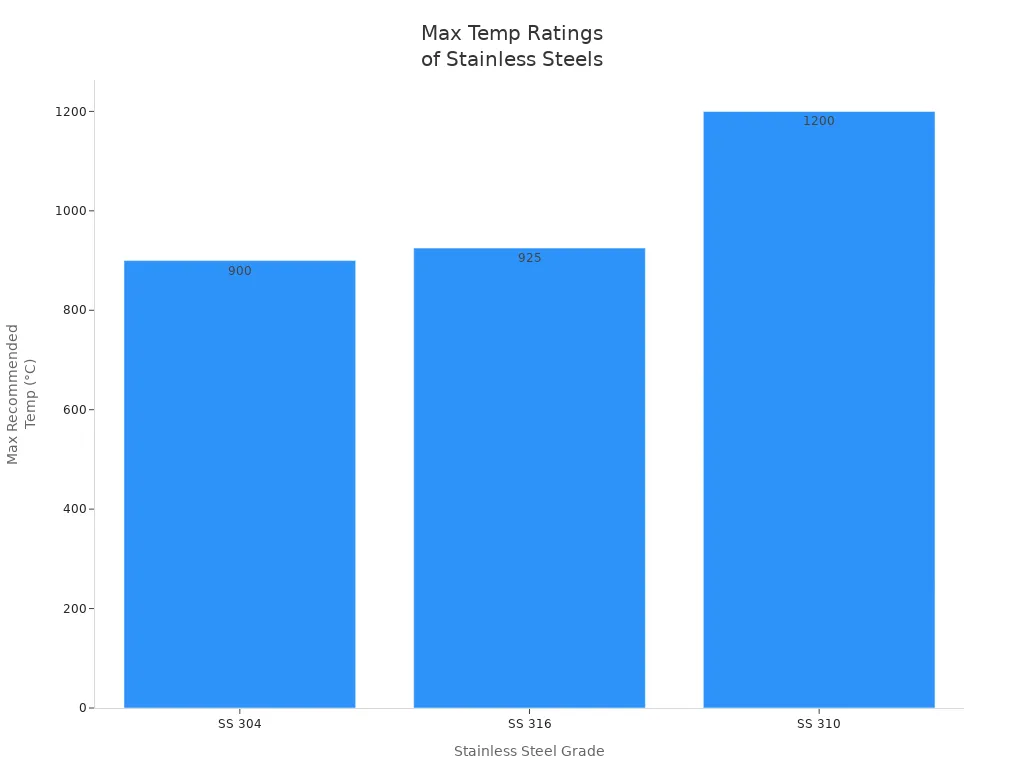
Material Grade | Key Characteristic | Max Recommended Application Temp | Primary Application Focus |
|---|---|---|---|
SS 304 | Economical, General Purpose | Up to 900 °C (1650 °F) | Lower temperature zones, general support |
SS 316 | Enhanced Corrosion Resistance (Mo) | Up to 925 °C (1700 °F) | Acidic environments, chemical reactors |
SS 310 | Superior Oxidation Resistance | Up to 1200 °C (2200 °F) | Furnace hot face, cement kilns |
You can pick the right material for your anchor lengths and anchor spacing. This helps your refractory anchor systems stand up to tough conditions.
You want installation to be quick and easy. V-shaped anchors are simple to put in place, especially for thin linings. Y-shaped anchors need careful anchor spacing because they support thicker linings. You might use floating anchors when your furnace needs to handle movement or expansion. Floating anchors let the lining shift a little without breaking. You can also use floating anchors to reduce stress and make repairs easier. When you choose the right anchor lengths and spacing, you make maintenance simple and keep your furnace running longer.
Tip: Always check the typical maximum temperature for your furnace before picking your refractory anchor systems.
When you start choosing the right refractory anchor, you need to look at a few important things. The table below shows what matters most:
Key Factor | Description |
|---|---|
Material Selection | Pick the right material for the anchor so it lasts longer and works better in your furnace. |
Anchor Design | Make sure the design fits your lining and supports it well. |
Sizing | Choose the right size. Anchors should reach 75-85% through the lining and stay close to the hot face. |
Maintenance Practices | Plan for easy checks and repairs to keep everything working safely. |
You also want anchor tips that can handle high heat. Always check that the anchor material matches your furnace’s temperature and lining thickness.
You will find different applications of refractory anchors in many industries. For example:
Cement furnaces and kilns use Y-shaped anchors to keep thick linings stable during extreme heat and thermal cycling.
Petrochemical reactors need strong anchors to handle high thermal and mechanical stress.
Glass furnaces rely on Y-shaped anchors to protect linings at temperatures over 1,200°C.
Each job has its own needs. The benefits of using refractory anchors show up when you pick the right type for your application.
You want to make the best choice for your project. Here are some tips:
Match the anchor type to your lining thickness and furnace temperature.
Think about how often your furnace heats up and cools down.
Choose a supplier with ISO9001 certification, like Jiangsu Guojin, for quality and reliability.
For custom or high-demand jobs, talk to Jiangsu Guojin’s experts. They have strong industry partnerships and can help you find the best solution.
Remember: Choosing the right refractory anchor system keeps your furnace safe and running longer.
Use V-shaped anchors for thin linings and lighter jobs.
Choose Y-shaped anchors for thick linings and heavy-duty furnaces.
Always match anchor type to your needs to avoid damage and keep your system safe.
For the best results, talk with a specialist before you choose.
You use an anchor to hold the furnace lining in place. The anchor stops the lining from moving or falling. The anchor keeps everything safe.
Tip: Always check your anchor before starting your furnace.
You look at your lining thickness and temperature. If you have a thin lining, use a V-shaped anchor. For thick linings, choose a Y-shaped anchor.
Lining Type | Best Anchor |
|---|---|
Thin | V-shaped anchor |
Thick | Y-shaped anchor |
You can use the same anchor for both jobs. The anchor works for repairs and new linings. Make sure the anchor fits your furnace needs.
Note: Ask a specialist if you need a custom anchor.