Views: 0 Author: Site Editor Publish Time: 2026-05-13 Origin: Site
Unplanned industrial furnace downtime represents a massive financial liability for modern manufacturing operations. Facilities can easily lose between $250,000 to $1,000,000 per hour during unexpected thermal shutdowns. Plant managers often blame the outer refractory material when a furnace lining collapses. However, catastrophic failures rarely start at the visible surface. They almost always stem from the invisible skeleton supporting the structure below. We call this critical skeleton the anchoring system. Insulation nails and anchors bear immense mechanical loads continuously. They mitigate heavy equipment vibration and manage massive thermal expansion differentials beautifully. When engineers specify these components correctly, the system thrives. A high-quality refractory lining should yield a 20-plus year lifespan. This comprehensive guide breaks down the physical mechanics of refractory anchoring. We explore strict material evaluation criteria and analyze real-world installation realities. Plant engineers will learn how to specify the right fastening systems. You can use these insights to prevent premature structural failure and maximize your operational uptime.
Mechanical Function: Anchors prevent "domino-effect" spalling by isolating thermal and mechanical stresses into manageable sections.
Material Selection: The stainless steel furnace anchor remains the industry standard due to its predictable yield strength at elevated temperatures and resistance to high-temperature oxidation.
System Compatibility: A fastener is only as stable as its surrounding insulation; compressive strength drop-offs in backup layers (like organic binders burning out at 475°F) can transfer lethal shear stress to the anchors.
Installation Efficiency: Utilizing modern fastening systems, such as the quick card insulation nail, significantly reduces the labor hours required to secure fiber and board linings around complex geometries.
Every high-temperature industrial vessel requires a robust structural skeleton. The refractory lining fastener acts as this vital foundation. It serves as a critical mechanical bridge. This bridge connects the cold steel casing through the insulating backup layer. It finally anchors securely into the hot working lining. The hot face endures direct flame impingement and corrosive gases constantly.
Managing independent thermal expansion is paramount for structural survival. The steel shell, the insulation layer, and the hot-face refractory behave very differently. They all possess entirely different thermal expansion coefficients. Metal expands much faster than ceramic materials when heated. Anchors must be rigid enough to hold heavy refractory linings against gravity. Yet, they must remain flexible enough to permit independent layer expansion. If an anchor is too rigid, it forces the layers together unnaturally. This restriction causes severe tensile stress. Tensile stress eventually leads to massive peeling and structural cracks across the entire face.
Industrial environments also generate continuous kinetic energy. Rotary kilns rotate heavily loaded materials relentlessly. Cyclic heat treat furnaces vibrate constantly from surrounding factory machinery. Fastening systems absorb this continuous mechanical stress. They keep the internal structures perfectly stable despite the movement. Proper anchoring prevents soft fiber blankets from slumping downward over time. Slumping creates dangerous localized hot spots on the exterior steel shell. Hot spots degrade the metal casing rapidly and pose severe safety hazards to operators.
Material selection ultimately defines anchor success or catastrophic failure. Standard carbon steel fails quickly in industrial heating applications. Carbon steel scales heavily at elevated temperatures. Oxidation eats away the metal surface aggressively. It loses tensile strength rapidly above 800°F. Therefore, strict metallurgical requirements demand high-performance engineered alloys.
The stainless steel furnace anchor provides essential operational longevity. Stainless alloys contain vital chromium and nickel elements. Chromium creates a protective oxide layer that stops further deep corrosion. Nickel provides superior ductility at extreme operating temperatures. Alloys like 304, 310, and 330 dominate modern industrial installations. They provide the exact oxidation and carburization resistance required for continuous safe operation.
You must evaluate anchoring materials based strictly on your operating atmospheres. We use a transparent evaluation framework to guide proper alloy selection.
Operating Environment | Maximum Temperature | Recommended Alloy | Key Metallurgical Benefit |
|---|---|---|---|
Standard Heat | Up to 1500°F | 304 Stainless Steel | Provides cost-effective baseline oxidation resistance for general atmospheric use. |
High Heat | Up to 2000°F | 310 Stainless Steel | High nickel content prevents extreme high-temperature oxidation and embrittlement. |
Corrosive Atmospheres | Varies by Chemistry | Inconel or Ceramic Anchors | Resists acidic and sulfur-heavy environments where basic metal corrodes instantly. |
Never under-specify anchor metallurgy just to save a few dollars upfront. This practice represents a highly dangerous engineering compromise. Marginally cheaper anchors succumb quickly to high-temperature creep. Creep is the slow, permanent deformation of solid materials under continuous thermal stress. As the anchor deforms, it stretches and bends downward under the refractory weight. This deformation ultimately causes the entire refractory section to detach from the wall.
Corrosion and shear stress destroy structural integrity completely from the inside out. Flue gas condensation drives many invisible chemical failures behind the wall. High-temperature process gases easily penetrate porous insulation materials. These hot gases migrate outward until they hit the much colder steel shell. The sudden temperature drop causes the gases to condense into highly corrosive acidic liquids. This acidic condensation pools directly at the anchor base. It aggressively attacks the anchor's primary weld. Once the weld rusts through, the anchor snaps off completely without warning.
Compressive strength dynamics also play a massive role in system stability. Backup insulation materials degrade over time naturally. Many engineers overlook this critical thermal fact. Organic binders in standard ceramic fiber boards often burn out around 475°F. This binder burnout reduces the board's compressive strength by up to 50 percent. The material shrinks inward and creates an empty void behind the hot face. This void shifts immense shear stress directly onto the metal anchors. Fasteners alone cannot support this massive unsupported weight forever.
Engineers implement specific design interventions to mitigate these known risks. You can apply specialized anti-corrosive mastic coatings directly to the interior steel shell. This barrier stops acidic condensation from eating the raw metal. Additionally, experienced contractors often pack anchor bases with high-density refractory castable. This dense material packing buffers the sensitive weld joint against severe thermal and chemical shock.
Installation workflows directly dictate facility downtime and total project labor costs. Labor hours vary wildly based on the chosen insulation strategy. Traditional board insulation requires extensive manual cutting and fitting. Workers must meticulously carve the hard board to fit perfectly around hundreds of existing anchors. This tedious manual process drives overall installation rates down. Crews typically average only 2.6 square feet per hour using boards. Conversely, utilizing ultra-lightweight gunnites over existing anchors changes the equation entirely. Spraying gunnite around pre-welded pins can easily triple your installation speed.
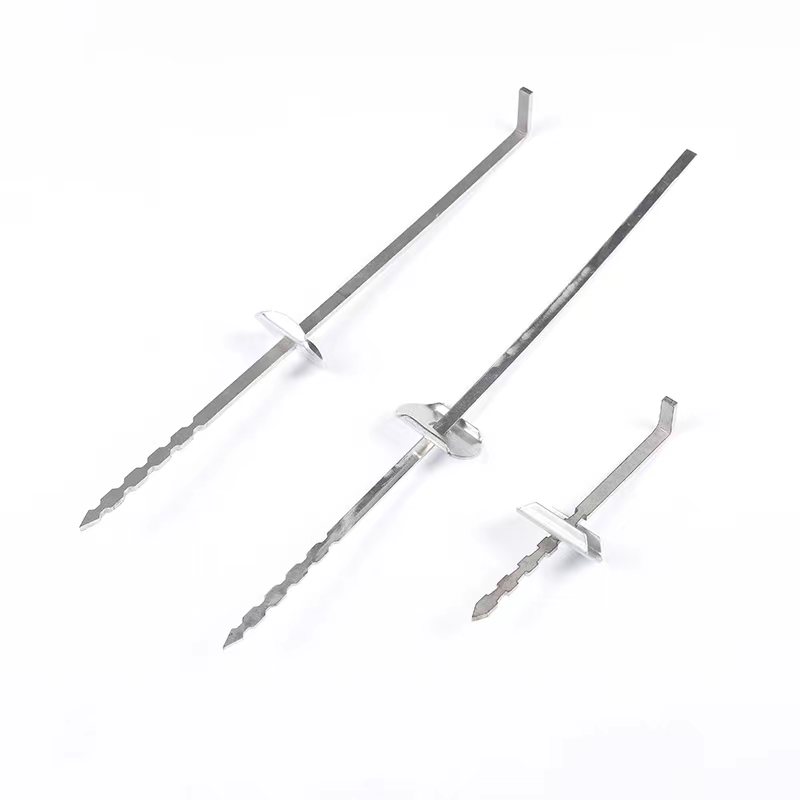
Soft linings require completely different mechanical fastening strategies. You must secure soft ceramic blankets firmly without tearing their fibers. The process starts by welding a base pin firmly to the cold steel shell. Installers then push the soft ceramic fiber blanket straight over the sharp metal pin. Finally, they lock the blanket tightly in place using a quick card insulation nail. This engineered speed clip ensures rapid, uniform material compression. It holds the blanket securely against the wall without ripping the fragile fiber matrix.
Anchor stability always begins at the weld pool itself. Proper surface preparation is absolutely critical for long-term structural integrity. Follow these proven industry practices for reliable fastening installation:
Sandblast all surface rust and protective mill scale off the steel casing before striking an arc.
Execute high-quality, full-penetration welding for every single pin base.
Ensure the weld pool completely encircles the anchor circumference smoothly.
Avoid using temporary spot welds entirely; they will instantly snap during initial thermal cycling.
Buyers must evaluate anchor geometry carefully before placing any hardware order. You will encounter several primary shapes in the industrial market today. V-shape, Y-shape, and corrugated designs serve very different structural purposes. Corrugated profiles significantly increase the surface gripping area of the metal. This extra surface tension helps secure dense, heavy castables effectively. The aggressive corrugated profile prevents the wet castable from sliding downward during curing. Alternatively, straight pins work perfectly for anchoring modular fiber blocks and soft blankets.
Sizing and spacing logic follows strict refractory engineering calculations. Industry standards dictate specific metal penetration depths. Anchors should penetrate 66 to 75 percent into the total refractory thickness. If they penetrate too deeply, the metal tips will melt directly at the hot face. Mechanical stress calculations strictly dictate the exact anchor spacing across the grid. Overhead roofs require much tighter spacing configurations compared to vertical sidewalls. Gravity exerts far more pulling force on suspended roof sections.
Demand rigorous quality assurance from your hardware suppliers. When you specify your next kiln insulation fixing nail, require comprehensive material documentation. Trusted manufacturers operate with complete technical transparency.
Request authentic Mill Test Reports (MTRs) for all raw stainless wire batches prior to manufacturing.
Verify strict dimensional tolerances and thread pitch before accepting bulk shipments to the job site.
Ask the supplier for destructive pull-test data performed rigorously on statistical sample welds.
Before the shutdown turnaround begins, initiate a mandatory cross-functional consultation. Your refractory material supplier and your fastener manufacturer must communicate directly. They need to verify absolute chemical and mechanical compatibility together. This proactive engineering step prevents massive structural failures during the crucial heat-up phase.
Insulation nails and anchoring systems are never generic hardware commodities. They are highly engineered mechanical components with vital structural responsibilities. These critical fasteners dictate the ultimate success or catastrophic failure of your entire refractory system.
You must prioritize proper thermal expansion matching above all other variables. Specify exact metal alloys based directly on your peak operating temperatures and corrosive chemical atmospheres. Demand rigorous welding quality assurance protocols during the entire installation phase. Never sacrifice long-term structural stability for marginal upfront cost savings on small metal hardware.
Audit your current anchor specifications today. Compare your existing engineering drawings against your historical lining failure data. If you notice recurring localized hot spots or sudden material detachment, take immediate investigative action. Consult a qualified metallurgical engineer before planning your next major furnace rebuild to ensure lasting stability.
A: Spacing depends heavily on lining thickness, overall density, and installation orientation. Overhead roofs require much tighter geometric configurations than vertical walls. Typically, general spacing ranges from 6 to 12 inches on center. Precise spacing requires strict engineering calculations. These calculations perfectly balance maximum holding power against unwanted thermal heat transfer running outward through the metal pins.
A: The most common causes involve incompatible thermal expansion rates between the rigid metal anchor and the surrounding ceramic refractory material. Invisible weld-point corrosion caused by acid gas condensation also destroys the structural base. Finally, selecting an incorrect alloy with insufficient high-temperature yield strength leads to rapid creep deformation and eventual mechanical snapping.
A: Generally, no. Heavy castables require specialized V-steer or deeply corrugated anchors to provide internal mechanical grip. In contrast, soft fiber linings require simple straight metal studs. Installers pair these straight studs precisely with a kiln insulation fixing nail or a ceramic cupped washer to compress the soft material externally.
A: Standard quality control involves a strict visual inspection of the actual weld pool. Inspectors look for full uniform penetration and absolute zero porosity. You should also perform a standard bend test or hammer test on a randomized statistical sample. Strike the metal anchor firmly to ensure it bends smoothly rather than snapping cleanly at the weld point.