Views: 0 Author: Site Editor Publish Time: 2026-05-01 Origin: Site
When a localized refractory anchor fails, it inevitably cascades into a catastrophic lining collapse. These failures cause immediate budget overruns, severe safety hazards, and unplanned plant downtime. You simply cannot ignore the high-stakes reality of anchor selection in heavy industry. Plant managers and turnaround planners must not rely on generic specifications to protect their assets. Anchor selection must directly respond to distinct thermal cycling, chemical attacks, and mechanical stress profiles. These harsh profiles vary wildly between steel processing and petrochemical refining. Using off-the-shelf components for complex environments guarantees failure.
Our objective is to provide you with an evidence-based framework for confident specification. We will help you identify the correct metallurgical grades, structural geometries, and critical installation standards. By following this guide, you can ensure total lining stability. You will learn how to match hardware to specific operational threats, preventing disastrous disruptions before they begin.
Operating temperature is only the baseline; specific gas environments (sulfidation vs. oxidation) dictate the shift from standard austenitic stainless steels to high-nickel alloys like Inconel 601.
Structural geometry (Y-type, V-type, Spiral) must strictly align with the anticipated thermal expansion and the refractory carrier type.
Strict engineering tolerances—such as 75-85% embedment depth and a mandatory 25mm hot-face clearance—are non-negotiable to prevent premature failure.
Evaluating a supplier requires looking past raw material data into secondary processing controls, such as bright annealing and automated welding capabilities.
You cannot treat anchoring systems as minor line items. When compromised anchors give way, they force premature outages. You might see a minor component failure rapidly turn into a multi-million-dollar production halt. We know unplanned shutdowns cost industrial facilities heavily in lost throughput, expensive emergency labor, and wasted energy resources.
Industrial operations run on tight margins and strict schedules. A failed anchoring system immediately compromises the refractory lining. The resulting heat leaks degrade outer steel shells rapidly. Plant operators must halt production entirely to address the breach. Emergency maintenance requires extensive cooling times, demolition, and precise reinstallation. You lose days or weeks of operational revenue due to a single compromised steel wire.
You must understand how anchors degrade in extreme environments. Two primary threats compromise anchor integrity over time:
High-Temperature Oxidation: Constant heat exposure causes metals to oxidize. This process weakens the fundamental metallurgical structure. The anchors thin out and lose their tensile strength.
Sulfidation: Environments rich in sulfur attack metallic grain boundaries. This induces rapid embrittlement. The anchors literally snap under standard mechanical loads.
Facility managers must prioritize rigid safety frameworks. You must adhere to API 936 standards for refractory installation. These strict guidelines mitigate operational risks during complex turnarounds. Following verified standards keeps your facility insurance compliant. It also ensures you protect your on-site workforce from catastrophic thermal containment breaches.
Selecting the right alloy requires a precise analysis of your operating environment. Temperature represents only the baseline metric. You must analyze the specific chemical attacks your steel mill furnace anchor will face daily.
For standard high-heat operations, austenitic stainless steels provide excellent structural support. We categorize these baseline materials by their distinct chemical resistances.
304/310 Stainless Steel: 304 SS works for low-demand zones. However, we position 310 SS as the definitive standard for higher chromium and nickel requirements. It delivers superior oxidation resistance up to 2000°F.
316 Stainless Steel: We highlight 316 SS for specific chemical threats. It offers vital utility in high-acid or salt-heavy chemical reactor environments. Its molybdenum addition prevents pitting.
321 Stainless Steel: This grade features a titanium-stabilized composition. It prevents intergranular corrosion during cooling phases. It also maintains non-magnetic properties, which protects sensitive facility instrumentation.
Standard stainless steels melt or degrade rapidly beyond the 2000°F threshold. You must shift to advanced high-nickel alloys to maintain integrity.
253MA: We specify 253MA for environments demanding extreme resilience. It offers immense resistance to cyclic heating and cooling. It effectively bridges the gap between stainless steel and premium nickel alloys.
Inconel 601: We recommend Inconel 601 as the definitive standard for extreme operations. It survives sulfur-bearing environments effortlessly. It provides exceptional carburization resistance at temperatures exceeding 2200°F.
Metals eventually reach their physical limits. You must utilize ceramic alternatives when temperatures exceed standard thresholds.
Ceramic Anchors (Alumina/Corundum): We introduce ceramic alternatives for extreme thermal zones exceeding 1300°C (2372°F). Metal alloys degrade instantly here. These high-alumina parts remain fully compliant with ASTM C 863. They anchor heavy linings safely in the most hostile environments.
Material Grade | Max Temperature Limit | Primary Application / Benefit |
|---|---|---|
304 Stainless Steel | 1650°F | Low-demand heat zones; baseline oxidation resistance. |
310 Stainless Steel | 2000°F | High chromium/nickel content; standard for furnaces. |
316 Stainless Steel | 1800°F | High-acid or salt-heavy chemical reactors. |
321 Stainless Steel | 1650°F | Titanium stabilized; prevents intergranular corrosion. |
253MA | 2100°F | Extreme resistance to cyclic heating/cooling. |
Inconel 601 | 2200°F+ | Sulfur-bearing environments; superior carburization resistance. |
Ceramic (Alumina) | 2372°F+ | Exceeds metal limits; compliant with ASTM C 863. |
Alloy chemistry alone cannot keep a refractory lining secured. You must match the structural geometry of the hardware to the anticipated physical load. The design dictates how well the support system distributes mechanical stress during operation.
These classic geometric profiles provide reliable static support. They offer straight-forward installation across many standard industrial environments.
V-Type: This shape works best for standard structural retention. You will frequently find V-types securing linings in rotary kilns and waste incinerators. They grip castable refractory materials effectively under static loads.
U-Type: This formation provides optimal surface area contact. It maximizes hold strength to support heavy-load refractory structures. We recommend U-types for dense cement plants and large-scale steel mills.
Standard shapes fail when subjected to rapid heating and cooling cycles. You need advanced geometries to handle severe cyclic stress environments.
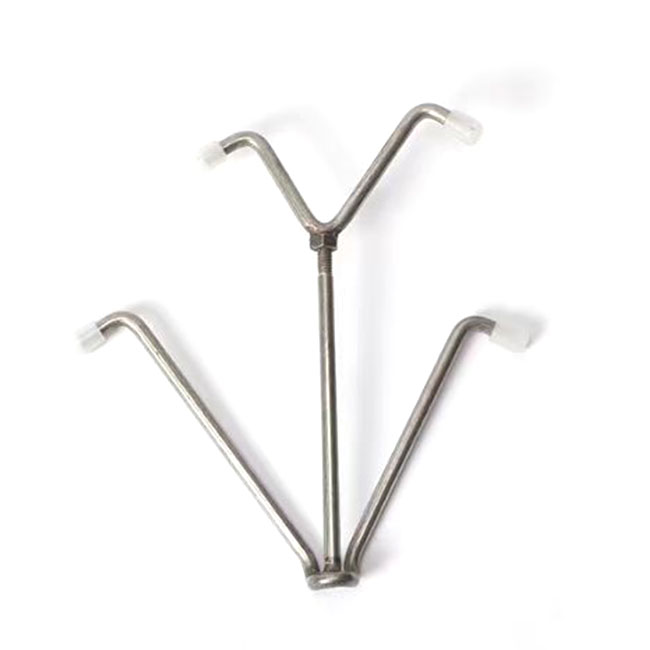
Y-Type: This geometry proves crucial for industrial boilers and petrochemical plants. Frequent temperature fluctuations demand built-in thermal expansion allowances. The Y-shape permits multidirectional stress relief inside the lining.
Spiral Design: Engineers created the spiral shape to optimize stress distribution. It actively absorbs severe thermal cycling shocks. You should deploy spiral configurations in high-temp pipelines and volatile chemical reactors.
Some environments require continuous shallow retention rather than isolated point-load anchoring. We evaluate Hexagonal Mesh (Hexmesh) systems for highly abrasive environments. Cyclones and fluid catalytic cracking units benefit immensely from Hexmesh. The interconnected grid locks shallow linings in place. It prevents widespread erosion caused by high-velocity particulate flows.
Proper installation guarantees the structural integrity of your selected materials. An incorrectly embedded furnace insulation nail will cause premature refractory failure regardless of its alloy grade. You must follow strict engineering tolerances.
Engineering physics dictates exact placement metrics. We establish two vital rules for depth and clearance.
The 75-85% Rule: The chosen hardware must penetrate 75% to 85% of the total refractory lining depth. Too shallow, and the lining shears off. Too deep, and it faces direct thermal destruction.
The Thermal Buffer Rule: Anchor tips must remain at least 25mm away from the ultimate hot face. This clearance prevents direct thermal conduction into the metal body. It mitigates accelerated degradation and premature melting.
Metal expands significantly under intense heat. Castable refractory does not expand at the same rate. This differential causes severe cracking if left unaddressed. You must detail the necessity of using plastic caps or specialized bitumen coatings on anchor tips.
These protective layers burn off entirely during the initial curing phase. They leave behind the exact necessary void. This micro-gap allows the metal hardware to expand freely. It moves without cracking the surrounding castable material or structural brickwork.
You cannot randomly scatter hardware across a furnace wall. Anchor spacing arrays must be engineered logically. Planners align spacing inversely to the severity of the operational environment. Harsher conditions demand tighter grouping patterns.
Furthermore, spacing must correlate directly with the density of the chosen refractory material. Heavy castables require dense support networks. Lighter ceramic fiber blankets tolerate wider spacing grids. Proper array planning prevents localized sagging and catastrophic wall collapse.
You cannot judge a supplier based on raw material certificates alone. A reliable petrochemical furnace anchor manufacturer must demonstrate advanced secondary processing capabilities. Their quality control frameworks dictate your long-term success.
Metal fabrication introduces severe internal stresses. Bending and cutting harden the metal dangerously. You must require vendors to utilize Bright Annealing processes.
This specialized heat treatment relieves internal manufacturing stress completely. It reduces metal hardness back to optimal levels. Bright Annealing prevents micro-cracking during early operations. Untreated hardware frequently snaps during the first thermal cycle due to residual fabrication stress.
Inconsistent manual welding ruins perfect alloys. We heavily compare manual techniques against Rapid Arc Welding (RAW) or automated stud welding systems.
Human error causes irregular fusion zones and slag inclusions. Automation reduces weld defect rates to near-zero. This consistency proves critical as a core metric for modular prefabrication. Secure welds prevent detachment failures inside critical chemical reactors.
Engineering teams operate on global standards. A mature manufacturing partner must provide seamless cross-referencing capabilities. They should map their materials directly between ASTM, European WNR (DIN), and UNS material standards.
This transparency ensures seamless procurement. It allows your engineering verification teams to audit materials effortlessly. You avoid costly delays caused by mismatched international specifications.
You must treat your refractory supports as highly engineered systems rather than generic bulk commodities. Our decision matrix clarifies this approach perfectly. Material chemistry must survive the specific gas environment. The structural shape must securely support the physical load and handle the thermal cycle. Lastly, precise installation must leave adequate room for structural expansion.
Planners should transition away from simple temperature-based purchasing. We advise initiating vendor discussions with highly specific process gas data, such as exact sulfur and carbon levels. Use the 75-85% embedment rule strictly. Demand bright annealed hardware. By demanding precision at every phase, you lock in long-term reliability and protect your facility from catastrophic downtime.
A: No. Exposed anchors suffer from invisible metallurgical fatigue, stress-corrosion cracking, and severe embrittlement. They lose their structural integrity after enduring intense thermal cycling. Reusing them introduces an unacceptable risk of hidden failure. You must replace them entirely to guarantee lining stability.
A: We strongly advise against mixing different alloys. Doing so introduces a severe risk of galvanic corrosion. Dissimilar metals react dangerously when they interact under high heat and chemical exposure. This reaction accelerates degradation, leading to rapid localized failures across the entire system.
A: You must cite API 936 when evaluating your high temp kiln accessories and installation protocols. It governs quality control, testing, and application. Additionally, you should reference ASTM C 863. This standard dictates the chemical and thermal resistance requirements for specific refractory support materials.