Views: 0 Author: Site Editor Publish Time: 2026-05-15 Origin: Site
Furnace lining failure is far more than a routine maintenance issue. It acts as a primary driver of unplanned downtime and massive energy loss. It also creates severe safety hazards for personnel in high-temperature operations. Refractory spalling and structural collapse rarely stem from the refractory material alone. These catastrophic failures usually originate from inadequate load transfer deep within the structure. Poor thermal stress mismanagement at the anchor level causes the rigid lining to break. We provide plant managers, kiln engineers, and procurement teams with a practical, evidence-based evaluation framework. You will learn how specific anchor systems prevent failure directly. We also explain how to choose the right components for your unique thermal profile.
Stress Dispersion: Proper anchoring systems distribute mechanical and thermal loads, preventing localized refractory collapse.
Installation Efficiency: Innovations like the quick card insulation nail significantly reduce installation time and human error during kiln relining.
Material Matching: Long-term stability requires aligning the anchor’s metallurgy with the furnace's operating temperature and chemical atmosphere.
Risk Mitigation: Strict spacing guidelines, expansion allowances, and welding protocols are non-negotiable for ensuring lining integrity.
A furnace relies entirely on its structural skeleton to survive extreme conditions. Here, a furnace lining fixing anchor plays an essential role. It transfers the immense weight of the refractory lining directly to the cold face, which is usually the steel furnace shell. Heavy castable concrete possesses tremendous mass. Gravity constantly attempts to pull this dense material down. Without proper mechanical support, the refractory matrix would quickly collapse under its own weight.
Managing thermal expansion presents another major engineering challenge. Steel casings and refractory materials heat up at vastly different rates. They expand differently when exposed to high temperatures. Anchors must accommodate this differential expansion safely. They must hold the castable firmly in place while flexing just enough to prevent rigid snapping. If the anchor system is too stiff, the expanding refractory pushes against it and cracks.
Furthermore, anchors effectively minimize destructive shear stress. Specific anchor geometries lock the refractory matrix tightly together. They prevent internal sheer planes from forming within the castable. Once a sheer plane develops, structural slumping inevitably follows. To prevent this, engineers utilize specific shapes:
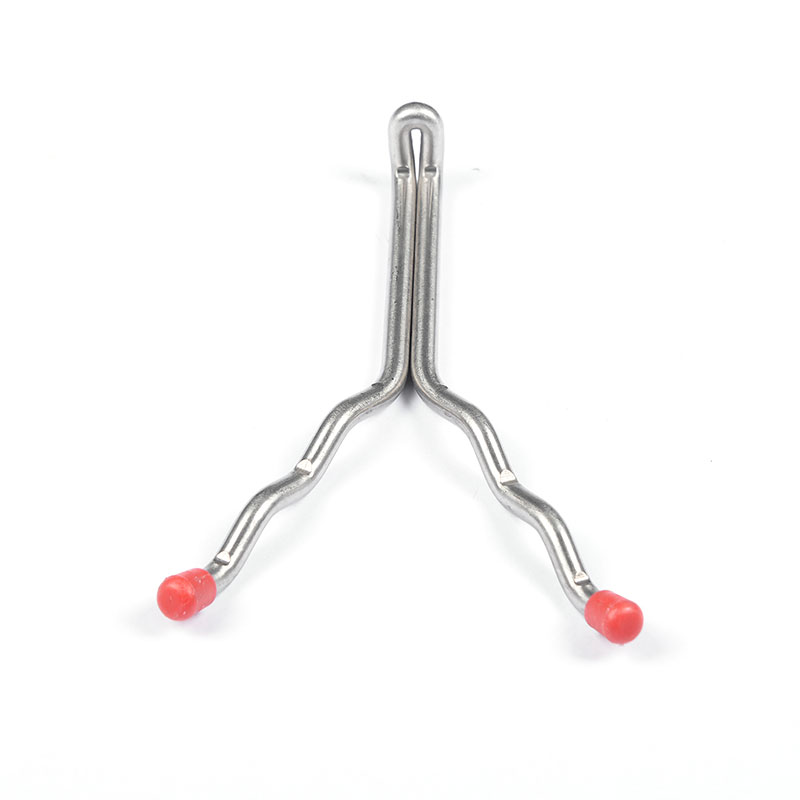
V-shape profiles: These work exceptionally well for thinner linings. They provide straightforward load dispersion and are easy to install.
Y-shape profiles: These offer incredible multidirectional gripping power. We rely on them heavily for thick, dense castable installations.
Corrugated profiles: These maximize the surface area contact between the metal and the concrete. They drastically reduce the risk of continuous slip planes forming.
Best Practice: Always align the depth of your anchor to reach roughly 70% to 80% of the total refractory lining thickness. This ensures optimal holding power without exposing the metal tip directly to the extreme hot face temperatures.
Rapid temperature fluctuations severely damage kiln interiors over time. Furnaces heat up and cool down repeatedly during operational cycles. This thermal cycling causes micro-cracking across the refractory surface. A rigid anchoring system transfers this stress directly back to the brittle refractory. Instead, a flexible anti-falling lining anchorage absorbs these drastic thermal shifts. It flexes slightly during thermal cycling. This vital flexibility prevents the transfer of harmful stress back into the rigid castable.
Over time, high heat degrades metal components aggressively. Oxidation and high-temperature creep are undeniable realities in furnace maintenance. High heat causes an oxide scale to form on the anchor surface. This rust-like scale takes up significantly more volume than the original steel. If designers ignore this expansion, the growing scale bursts the surrounding castable from the inside. Smart anchorage designs include precise allowances for this oxidation scale. They give the metal room to grow without cracking the concrete.
Mechanical vibration presents another massive challenge for structural integrity. Rotating kilns spin and vibrate constantly. Physically agitated furnaces shake aggressively during standard operations. Dynamic load-bearing anchors prevent premature lining detachment in these brutal environments. They maintain a firm, unyielding grip despite the continuous mechanical movement.
Root Cause | Failure Mechanism | Anchorage Countermeasure |
|---|---|---|
Thermal Cycling & Shock | Micro-cracking from rapid expansion and contraction | Flexible anchors that absorb shifting stresses |
Oxidation & Creep | Metal scaling expands and fractures the castable | Properly capped tips and oxidation-resistant alloys |
Mechanical Vibration | Continuous shaking loosens the refractory bond | Dynamic, multi-pronged geometries (like Y-shapes) |
Extended furnace downtime during maintenance relining is incredibly painful for businesses. It halts production lines completely. It strains operating margins and puts immense pressure on engineering teams. Plant managers constantly seek ways to finish relining jobs faster without compromising safety. The relining bottleneck typically centers around the tedious installation of hundreds of individual wall anchors.
To solve this bottleneck, industry engineers developed specialized rapid-fastener systems. The quick card insulation nail serves as a prime example of this innovation. This fastener system utilizes advanced mechanical designs like rotary locks, speed clips, or self-locking washer mechanisms. They perform exceptionally well alongside ceramic fiber modules or thermal blanket insulation. Installers simply push the soft fiber blanket over the welded stud. They then slide the quick card clip down the shaft. It locks firmly into place instantly.
We evaluate these fast-installation systems using three strict criteria:
Labor Savings: These systems cut overall fastening time drastically. You avoid the slow, tedious processes required by traditional threaded bolts or ceramic anchor tying. Fast installation reduces human fatigue and minimizes labor hours in hazardous confined spaces.
Holding Power vs. Vibration: You must clearly understand their structural limitations. Quick card systems handle lightweight ceramic fiber insulation beautifully. However, they do not replace heavy-duty metallic anchors for dense castables. High-vibration environments might gradually loosen simple friction clips over time.
Skeptical Check: Fast installation sounds fantastic on paper. However, speed should never compromise insulation compression. Poor compression leaves dangerous gaps between the fiber layers. These tiny gaps inevitably lead to severe heat leaks. Always ensure the clips press the fiber blanket tightly against the steel shell.
Selecting the right alloy prevents catastrophic structural meltdowns. You must establish a strict baseline evaluation framework for metallurgical selection based on precise temperature thresholds. For example, standard SUS 304 stainless steel performs admirably in environments up to 800°C. If continuous operating temperatures reach 1100°C, you must upgrade to 310S stainless steel. Aggressive, ultra-high-temperature environments demand advanced superalloys like Inconel or Alloy 601 to survive.
Corrosive chemical atmospheres complicate these material choices significantly. Pure heat is rarely the only threat. Sulfur attacks base metals aggressively, causing rapid embrittlement. Reducing atmospheres, saturated with carbon monoxide, cause a destructive phenomenon known as metal dusting. Alkali attacks break down standard steels quickly in cement processing. These chemical threats drastically alter your baseline requirements for kiln safety anchoring parts. You must upgrade to highly alloyed, corrosion-resistant materials to ensure long-term survival in these harsh environments.
Eventually, operational heat surpasses the physical limits of any forged metal. We face a strict engineering decision boundary here. Metallic anchors usually fail completely when continuous temperatures exceed 1200°C. They lose their tensile strength and begin to melt. At this critical point, high-alumina ceramic anchors become absolutely mandatory. Ceramic anchors handle extreme heat environments easily. However, they possess a major flaw: they are highly brittle. You must handle them gently during installation to prevent shattering upon impact.
Material / Alloy Grade | Max Operating Temp (°C) | Primary Application & Resistance |
|---|---|---|
SUS 304 Stainless Steel | ~ 800°C | Standard applications, low chemical exposure |
SUS 310S Stainless Steel | ~ 1100°C | High-temp environments, good oxidation resistance |
Alloy 601 / Inconel | ~ 1200°C | Aggressive corrosive atmospheres, severe thermal cycling |
High-Alumina Ceramic | > 1200°C | Extreme heat zones, highly brittle, requires careful handling |
Even the highest-grade alloys fail catastrophically if installed incorrectly. Anchor density and spatial layout require careful mathematical calculation. You need significantly closer spacing on furnace roofs and overhead crowns. Gravity constantly pulls down on these suspended areas, demanding maximum support. Side walls generally tolerate slightly wider anchor spacing. However, you must avoid the temptation of over-anchoring. Too many metal anchors create excessive thermal bridging. They transfer intense heat straight through the lining to the exterior steel casing, wasting massive amounts of energy.
Welding quality control remains absolutely vital. The best engineered anchor will fail instantly if the base weld is porous. A distinct lack of weld penetration at the casing spells structural disaster. We strongly recommend adhering to established industry standards for pre-installation weld testing. A simple hammer test or dye penetrant check reveals hidden porosity flaws easily. You must train your welding teams specifically on refractory hardware attachment.
Finally, we must emphasize the critical necessity of caping and expansion allowances. When wrapping anchor tips, installers must use specialized plastic caps or heavy-duty tape. Dense castables lock around the metal profile extremely tightly as they cure. When the furnace fires up, the metal anchor expands much faster than the surrounding castable. If the metal tip has no physical room to grow, it acts exactly like a mechanical wedge. It splits the castable forcefully from the inside out. Plastic caps melt away safely at low temperatures during the initial dry-out phase. They leave a perfect expansion void behind, saving the lining from internal fracture.
Common Mistake: Forgetting to tape or cap the tips of V-anchors before pouring dense castable is a leading cause of premature star-cracking in newly lined furnaces.
Preventing lining fall-off requires a highly disciplined, holistic approach to engineering. You must seamlessly match the anchor geometry to your chosen refractory material. You must align the anchor's metallurgy precisely to your kiln's temperature and chemical profile. You also need to adapt your specific installation method to fit your facility's operational downtime constraints safely.
We advise engineering teams to thoroughly audit their previous failure points before finalizing a new system. Did the previous anchors melt? Did they break cleanly at the weld joint? Did the fastener pull straight through the soft insulation? Answering these operational questions provides the ultimate shortlisting logic for your next purchase.
Take proactive steps today. We encourage you to consult directly with specialized refractory hardware experts. Map out your specific kiln thermal profile meticulously. Request pilot samples of updated anchor designs for your next maintenance turnaround. Testing small sections ensures optimal reliability before committing to a complete relining project.
A: Standard grid patterns typically sit around 300mm x 300mm. However, it depends entirely on your insulation thickness and orientation. Roof sections require denser patterns to fight gravity effectively. Wall sections can usually tolerate slightly wider spacing. Always follow the insulation manufacturer's exact layout guidelines to prevent sagging.
A: No. Pushing 304 stainless steel beyond its specific continuous operating limit invites catastrophic failure. It oxidizes rapidly and loses structural integrity above 800°C. Saving pennies on cheaper alloys results in massive operational downtime costs when the entire refractory lining collapses.
A: This usually points directly to a lack of expansion allowances. Failing to cap the anchor tips prevents the metal from expanding freely when heated. The expanding anchor wedges into the rigid castable, causing internal star-cracking. Using a too-rigid anchor geometry for a high-thermal-cycling environment also causes this specific issue.