Views: 426 Author: Site Editor Publish Time: 2026-02-25 Origin: Site
Determining exactly how much weight flat steel can hold is a critical question for engineers, DIY enthusiasts, and industrial planners alike. Whether you are building a heavy-duty storage rack, a trailer frame, or a structural support beam, the load-bearing capacity of your metal dictates the safety and longevity of the entire project. It is not just about the thickness of the material; it involves a complex interplay of physics, metallurgy, and environmental factors.
In this comprehensive guide, we explore the specific load capacities of Hot rolled flat steel, the enhanced strength of Cold drawn flat steel, and how protective finishes like Galvanized flat steel affect performance. By understanding yield strength, deflection limits, and orientation, you can confidently select the right material for your load-bearing requirements.
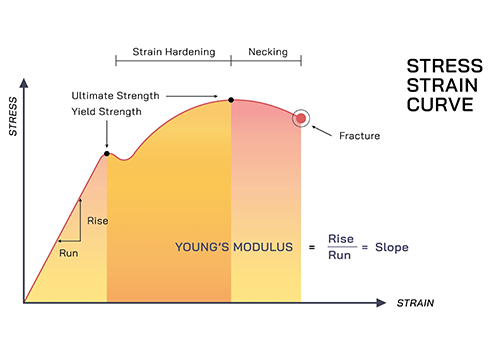
When people ask how much weight flat steel can hold, they are usually referring to its "Yield Strength." This is the point where the metal permanently deforms. Before this point, the steel is elastic; it can bend under weight and snap back. Once you cross the yield point, the structural integrity of the Structural flat steel is compromised.
Most standard Structural flat steel (like A36 grade) has a yield strength of approximately 36,000 psi (pounds per square inch). However, this number is a material property, not a direct weight limit for a specific bar. To calculate the actual weight capacity, you must consider the cross-sectional area and the span length. A short, thick piece of flat steel acts differently than a long, thin one, even if they are made of the same alloy.
It is also vital to distinguish between static loads (weight that stays still) and dynamic loads (weight that moves or vibrates). Flat steel can typically handle much higher static loads than dynamic ones. If your project involves machinery or moving vehicles, you must apply a "Safety Factor," often reducing the theoretical weight limit by 50% or more to ensure the metal doesn't fatigue over time.
The way the metal is manufactured significantly impacts how much weight it can support. While the chemical composition might be similar, the mechanical properties differ based on the rolling temperature.
Hot rolled flat steel is processed at very high temperatures, above its recrystallization point. This makes it easier to shape and less expensive. Because it cools at room temperature, it has less internal stress, but its dimensions are less precise. In heavy construction where the exact millimetre doesn't matter, Hot rolled flat steel is the go-to choice for massive load-bearing frames. Its ductility allows it to provide warning (by bending) before a catastrophic failure occurs.
On the other hand, Cold drawn flat steel is processed further at room temperature. This "work hardening" increases the yield strength significantly—often by 20% or more compared to hot-rolled alternatives. If you have a space-constrained project where you need maximum weight capacity with a thinner profile, Cold drawn flat steel is superior. It is stiffer and holds its shape under higher stress, though it is more brittle than its hot-rolled counterpart.
| Property | Hot rolled flat steel | Cold drawn flat steel |
| Yield Strength | Standard (approx. 36-50 ksi) | High (approx. 60-70+ ksi) |
| Surface Finish | Scaly/Rough | Smooth/Polished |
| Weight Capacity | Better for large-scale bulk | Better for precision/high-stress |
| Cost | Economical | Premium |
Geometry is the "silent partner" in determining weight capacity. A piece of flat steel is essentially a rectangular beam. The most common mistake is assuming that doubling the width doubles the strength. In reality, doubling the thickness has a much more dramatic effect on load capacity.
In the world of physics, the "Moment of Inertia" measures an object's resistance to bending. For flat steel, the formula involves the thickness cubed ($t^3$). This means that if you increase the thickness of your flat steel from 1/4 inch to 1/2 inch, you aren't just making it twice as strong; you are making it significantly more resistant to deflection. If your project involves heavy vertical pressure, always prioritize thickness over width to maximize the weight the bar can hold.
The "Span" is the distance between two supports. As the span increases, the weight capacity of the flat steel drops exponentially. A 2-foot bar of Structural flat steel might hold 1,000 pounds easily, but if you increase that span to 4 feet, the same bar might buckle under only 250 pounds. When calculating load, we always look at the "Maximum Bending Moment." If you must span a long distance with flat steel, you likely need to weld it into an "L" or "T" shape to provide vertical stiffness, as flat bars are inherently weak over long spans when laid horizontally.
This is perhaps the most actionable insight for anyone using flat steel. The orientation of the metal determines its performance more than almost any other factor. Because flat steel is thin in one dimension and wide in the other, it has two very different "axes" of strength.
When you lay flat steel like a plank, it is at its weakest. In this orientation, it deflects (bends) very easily under minimal weight. Most Structural flat steel used this way is meant for "tension" (pulling) rather than "compression" (pushing/weight-bearing). If you must lay it flat, it should be supported by a sturdier structure underneath, acting more as a skin or a plate than a primary beam.
To maximize the weight flat steel can hold, you must stand it on its edge. By rotating the bar 90 degrees, you utilize the width of the steel as the "depth" of the beam. A 4-inch wide by 1/4-inch thick piece of Cold drawn flat steel standing on its 1/4-inch edge can hold thousands of pounds more than the same piece laid flat. This is why floor joists and rafters are always tall and thin; they leverage the vertical dimension to fight gravity.
If your flat steel is outdoors or in a humid factory, its weight-bearing capacity will degrade over time unless it is protected. Corrosion eats away at the cross-sectional area of the steel. As the metal thins, its "Moment of Inertia" shrinks, and its weight limit plummets.
Galvanized flat steel is coated with a layer of zinc. While the zinc itself doesn't add structural strength, it prevents the iron in the steel from oxidizing. For outdoor structures like stairs or walkway supports, using Galvanized flat steel ensures that the weight capacity you calculate today remains the same ten years from now. Without this protection, a rusted bar may lose 10% to 50% of its load capacity within a few years of heavy exposure.
In chemical or marine environments, Stainless flat steel (such as 304 or 316 grade) is required. It is important to note that many grades of Stainless flat steel actually have a slightly lower yield strength than high-carbon Structural flat steel. However, because it does not rust, it maintains its integrity in environments where carbon steel would fail. You must balance the immediate weight capacity with the long-term environmental durability of the material.
To know how much weight your flat steel can hold, you can use a basic beam deflection formula. While we always recommend consulting a structural engineer for safety-critical projects, you can perform a "sanity check" using standard physics.
For Structural flat steel, we rarely use the full Yield Strength. Instead, we use "Allowable Stress," which includes a safety factor (often 1.67 in the US). This accounts for minor imperfections in the steel or unexpected weight spikes.
Identify the Grade: Is it Hot rolled flat steel (lower yield) or Cold drawn flat steel (higher yield)?
Calculate Section Modulus (S): For a rectangle, S = (width x thickness²) / 6. Note that "width" and "thickness" swap roles depending on if the bar is flat or on-edge.
Determine the Span: Measure the distance between supports in inches.
Solve for Load (P): For a center-point load, the formula is P = (4 x AllowableStress x S) / Span.
This calculation shows that even a small change in thickness or span creates a massive shift in how much weight the flat steel can safely manage.
Not all flat steel is created equal. The alloy additions (like manganese, chrome, or molybdenum) change the molecular structure of the metal, allowing it to hold significantly more weight without increasing the physical size of the bar.
If you are designing for the automotive or heavy machinery industry, you might use HSLA Structural flat steel. These alloys are designed to provide a much higher strength-to-weight ratio. They allow you to reduce the overall weight of the structure (saving fuel or material costs) while maintaining the same weight-holding capacity as thicker, standard carbon steel.
A36 (Standard): Excellent for general construction; holds moderate weight.
1018 (Cold Drawn): Great for precision parts; holds higher weight with less bending.
A514 (Quenched & Tempered): Used in cranes and heavy lifting; can hold immense weight but is harder to weld.
When choosing your flat steel, match the grade to the "consequence of failure." If the weight is just supporting a shelf, A36 is fine. If it is supporting a bridge or a car lift, specialized high-strength alloys are mandatory.
1.How much weight can a 1/4 inch thick flat steel bar hold?
It depends on the width and the span. A 2-inch wide, 1/4-inch thick Hot rolled flat steel bar spanning 12 inches can hold roughly 200-300 lbs when laid flat before significant bending. On-edge, that same bar could potentially hold over 2,000 lbs.
2.Is stainless flat steel stronger than regular flat steel?
Not necessarily. Standard Structural flat steel often has a higher yield strength than common Stainless flat steel (like 304). However, stainless steel is much more resistant to environmental weakening.
3.Does galvanizing affect how much weight flat steel can hold?
The galvanizing process itself does not significantly change the strength of the steel. However, Galvanized flat steel is better at retaining its strength over time because it does not lose material to rust.
4.Can I weld flat steel to increase its weight capacity?
Yes. Welding two pieces of flat steel together to form a "T" or "I" shape drastically increases the "Moment of Inertia." This is a common way to use relatively thin flat steel to hold massive vertical loads over long spans.
The weight flat steel can hold is a variable result of material grade, manufacturing process, and, most importantly, geometric orientation. Cold drawn flat steel offers superior stiffness for precision tasks, while Hot rolled flat steel provides the ductile strength needed for large-scale structural frames. By understanding that thickness and vertical orientation are the most powerful factors in fighting deflection, you can design safer, more efficient structures. Always remember to apply a generous safety factor and consider environmental protection like Galvanized flat steel for any project exposed to the elements.
At Jiangsu Gangjiang Steel, we understand that your projects depend on the reliability of the materials you use. As a leading manufacturer and supplier, we operate an expansive, state-of-the-art factory dedicated to producing high-quality flat steel products for the global B2B market. Our production lines utilize advanced technology to offer a full range of processing, including Hot rolled, Cold drawn, Galvanized, and Stainless finishes.
We pride ourselves on our technical strength and rigorous quality control, ensuring that every batch of Structural flat steel meets international standards for yield strength and durability. Whether you are a large-scale construction firm or an industrial distributor, we provide the logistical expertise and manufacturing scale to support your most demanding load-bearing applications. Our team is committed to delivering not just steel, but the structural confidence your business requires.


