Views: 0 Author: Site Editor Publish Time: 2026-06-09 Origin: Site
Upgrading to premium refractory castables proves entirely useless if the underlying anchoring system fails. Cement plant managers and turnaround planners face high stakes every day. You cannot afford unexpected shutdowns caused by poorly secured linings.
A cement kiln operates under brutal physical conditions. It endures constant mechanical rotation. It faces harsh chemical attacks from alkali and sulfur compounds. Severe thermal cycling and aggressive cement clinker abrasion test every internal component. The metal shell relies entirely on the internal lining for protection. In turn, that lining relies entirely on its internal skeleton.
Selecting the right refractory anchorage is never about buying commodity hardware. You make a critical engineering decision here. This choice dictates turnaround frequency. It prevents catastrophic lining collapses. Ultimately, proper hardware selection protects the expensive steel shell from permanent damage.
Anchor failure—not refractory degradation—is a leading cause of premature cement kiln lining collapse.
Y type anchor and V type anchor designs offer specific mechanical advantages for securing castables in high-vibration rotary environments.
Proper metallurgy (e.g., 310S Stainless vs. Inconel) must be matched precisely to the localized temperature and corrosive gas profile of the kiln zone.
Installation execution, specifically maintaining a 75%–85% embedment depth and allowing for thermal expansion, is just as critical as component selection.
Standard industrial anchors often fail in cement applications. They simply cannot handle the unique combination of dynamic loads and aggressive chemical wear. You cannot treat a rotary kiln like a static boiler. The physical demands sit on an entirely different level.
Rotary kilns place constant shear stress on their internal structures. Gravity continuously pulls at both overhead and vertical lining sections. As the massive steel tube rotates, the heavy refractory mass constantly shifts its weight. This mechanical vibration demands superior holding power from every metal joint. If standard hardware bends under this cyclical load, the castable will quickly detach from the shell.
Corrosive gases permeate the cement production environment. Extreme temperature fluctuations trigger severe thermal cycling during start-ups and shut-downs. These rapid thermal shifts cause differential expansion. The outer metal shell and the inner refractory material expand and contract at completely different rates. Without robust, specialized anchors, this differential movement literally tears the monolithic lining apart from the inside out.
Cement clinker introduces heavy physical abrasion. It acts like heavy-duty sandpaper grinding against the internal kiln walls. Specialized metal fasteners stabilize the refractory buffer. They hold the hardened castable firmly in place. This stops the abrasive clinker from penetrating the lining and directly gouging the expensive steel shell. You need highly engineered hardware to survive this continuous punishment.
Industry-standard geometric profiles directly impact lining stability. You must choose shapes based on localized stress factors and mechanical loads. Evaluating cement furnace anchorage requires matching the specific profile to the corresponding kiln zone.
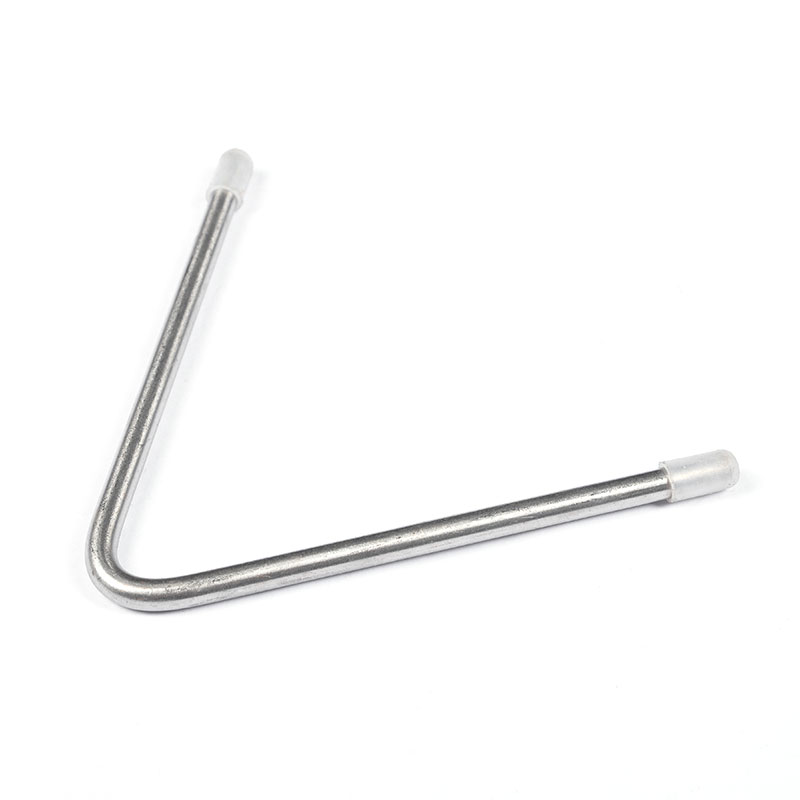
The V type anchor works best for standard monolithic castable linings. It features a simple, highly effective diverging leg design. This geometry offers broad load distribution across the refractory mass. It provides highly reliable structural support in static or low-stress zones of the plant. You will see them frequently deployed in preheater towers, tertiary air ducts, and cooler roofs. They hold standard weights efficiently without overcomplicating the installation process.
The Y type anchor excels in high-stress, dynamic zones. Engineers mandate them for the main rotary kiln sections and burner pipes. The distinct prongs deliver enhanced physical grip. They "bite" deeply into the dense castable material. The Y-shape traps the refractory material between its angles. This aggressively prevents lining separation under continuous rotational vibration. When you need maximum multi-directional holding power, this profile stands as the premier choice.
Wavy or corrugated leg profiles increase the surface contact area significantly. They create more physical friction between the metal and the castable. This structural tweak reduces the risk of spalling in heavy-wear areas. The undulations grip the concrete tightly. They prevent large chunks from slipping off the metal skeleton during sudden thermal shocks.
Thick brick linings require different hardware than monolithic castables. Ceramic brick hangers and metal ties step into this role. They handle massive weight loads. Brick linings shift considerably during thermal expansion. These specialized hangers accommodate that movement. They hold heavy refractory bricks securely against the ceiling and walls while allowing necessary dimensional flexibility.
Material choice represents a strict calculation of operational lifespan. Under-specifying steel grades always creates a false economy. Cheap metals oxidize rapidly. They lose structural integrity, fail, and cause catastrophic lining collapses. You must match the alloy to the specific heat and gas profile of the installation zone.
Carbon steel works exclusively for cold zones or backup insulation layers. Keep its application strictly below 1200°F (650°C). Beyond this threshold, carbon steel scales and disintegrates almost immediately.
Standard stainless steel alloys suit mid-range heat applications. Grades like 304 and 309 remain robust up to roughly 1600°F to 1800°F. However, they become highly susceptible to rapid oxidation during unexpected temperature peaks. We rarely recommend them for the primary burning zones.
High-grade stainless steel acts as the primary cement industry workhorse. Grade 310S provides highly reliable oxidation resistance. You can deploy it safely in environments reaching up to 2100°F (1150°C). It handles moderate sulfur content well. Most standard rotary kiln sections utilize 310S hardware successfully.
Extreme heat demands high-nickel alloys. Zones exceeding 2100°F require materials like Inconel 601. Areas facing severe chemical corrosion also demand these upgrades. High sulfidation or carburization will quickly degrade standard 310S. Inconel survives these harsh gas attacks while maintaining its tensile strength.
Ultra-high-temperature zones push past 3000°F (1650°C). Metal hardware simply melts or warps into useless shapes here. Pure ceramic hardware made from high-alumina or corundum becomes absolutely necessary. They secure exceptionally thick linings without yielding to the extreme thermal soaking.
Review the comparative chart below to guide your basic material selection process.
Material Grade | Maximum Safe Temperature | Primary Kiln Application Zone | Corrosion Resistance Level |
|---|---|---|---|
Carbon Steel | 1200°F (650°C) | Cold zones, exterior backup insulation | Very Low |
304 / 309 Stainless | 1600°F - 1800°F | Mid-range preheaters, low-stress ducts | Moderate |
310S Stainless | 2100°F (1150°C) | Main rotary kiln, general dynamic zones | High (Industry Standard) |
Inconel 601 | > 2100°F | High-sulfur zones, extreme burner areas | Excellent |
Pure Ceramic (Corundum) | 3000°F (1650°C+) | Ultra-high heat zones, massive brick arches | Absolute |
Premium materials fail rapidly if engineers implement them poorly. You must respect rigid installation parameters. Design execution dictates whether a lining survives five years or five months. Turnaround teams must strictly monitor these technical details.
The embedment depth rule dictates structural survival. Engineering standards mandate a specific penetration depth. Your hardware must penetrate 75% to 85% of the total refractory lining thickness.
Too shallow (Below 70%): The metal provides poor internal grip. The top layer of the castable remains unsupported. This shallow reach leads directly to early surface spalling.
Too deep (Above 85%): The metal tips sit far too close to the hot face. Extreme heat transfers directly into the metal. This causes rapid thermal degradation, massive oxidation, and eventual tip melting.
The spacing matrix determines how weight and stress distribute across the steel shell. You must balance the density of your hardware network carefully.
The risk of spacing too wide: Wide gaps leave heavy castable sections unsupported. The material begins to sag under its own weight. Structural weakness develops quickly across the span. Eventual collapse of large sections becomes inevitable.
The risk of spacing too dense: Placing components too close together increases unnecessary material costs. Worse, it creates concentrated thermal stress points. Metal expands faster than concrete. A dense cluster of expanding metal induces severe cracking across the hot face.
You should never guess these parameters on-site. Always consult the refractory manufacturer’s engineering tables. They calculate spacing based on specific castable density, operational angles, and mechanical loads.
Turnaround management must bridge the critical gap between procurement and site execution. Excellent hardware cannot overcome sloppy installation practices. We see many robust designs fail due to poor site execution.
Managing thermal expansion requires strict adherence to the cap rule. You must apply plastic caps, wax, or heavy tape to the tips of all metal hardware before pouring the castable. Metal expands significantly when heated. Concrete does not. The plastic cap creates a temporary physical barrier. During the initial heat-up phase, the cap burns away safely. This leaves a small, empty void above the metal tip. This void gives the metal room to expand outward. If you skip this step, the expanding metal acts like a wedge. It will crack the surrounding castable wide open.
Welding quality demands intense scrutiny. Poor surface preparation ruins perfectly good hardware. Welders often leave rust and mill scale intact on the shell. This creates weak, porous welds. The heavy rotational gravity of the kiln will snap these weak joints effortlessly.
Manual welding inconsistencies also cause high failure rates. Consider utilizing modern alternatives like Rapid Arc Welding (RAW). RAW equipment achieves highly consistent fusion. It shoots the fastener directly into the steel shell in milliseconds. This drastically lowers joint rejection rates and speeds up the turnaround schedule.
Incorrect orientation ruins the internal matrix. Alignment must account for the kiln's specific rotation axis. You cannot place hardware randomly. Wrong angles create hidden shear planes within the castable body. The flowing material and rotational forces will exploit these planes. These aligned weaknesses cause massive chunks of refractory to break away during normal operation. Always stagger the layout pattern. A staggered matrix breaks up shear planes and locks the monolithic structure together tightly.
Refractory anchors represent a tiny fraction of your total maintenance budget. Yet, their premature failure guarantees a 100% system failure. You cannot afford to treat these components as generic commodities.
Take immediate action before your next shutdown. Audit your current hardware specifications today. Compare them directly against your kiln’s specific temperature logs and chemical wear data. Identify areas where standard stainless steel consistently fails.
Consult a specialized refractory engineering team. Custom-match your materials and geometric shapes to specific kiln zones. Ensure your installation crews strictly follow embedment depth rules and thermal expansion protocols. Proactive engineering here prevents reactive, highly expensive emergency shutdowns later.
A: Spalling usually stems from an underlying hardware issue rather than poor refractory quality. A severe material mismatch between the anchor and the castable often triggers this. Missing thermal expansion caps restrict metal growth, cracking the surrounding material. Furthermore, an incorrect embedment depth weakens structural grip, causing surface layers to sheer off during rotation.
A: The main difference lies in geometric grip strength. The Y design provides a superior, multi-directional hold. This makes it ideal for high-vibration rotary environments where shear forces run high. Conversely, the standard V shape offers broad, reliable load distribution suited for static or lower-stress plant zones like preheater sections.
A: You must switch to ceramic options when continuous operating temperatures exceed the safe oxidation limits of high-nickel metallic alloys (typically above 2100°F). Ceramics also become mandatory in exceptionally thick lining applications where metal hardware would simply melt, warp, or lose all structural integrity under extreme thermal soaking.
A: Correct spacing depends entirely on the specific castable density, total lining thickness, and expected mechanical load. You should never guess this parameter. Always consult the refractory manufacturer’s engineering tables. Placing them too wide causes sagging, while placing them too dense creates thermal stress points that induce widespread cracking.